The Beginner's Roadmap to Becoming a Licensed Esthetician in the US
SBSapphira Beauty Academy · October 10, 2026 · 4 min read
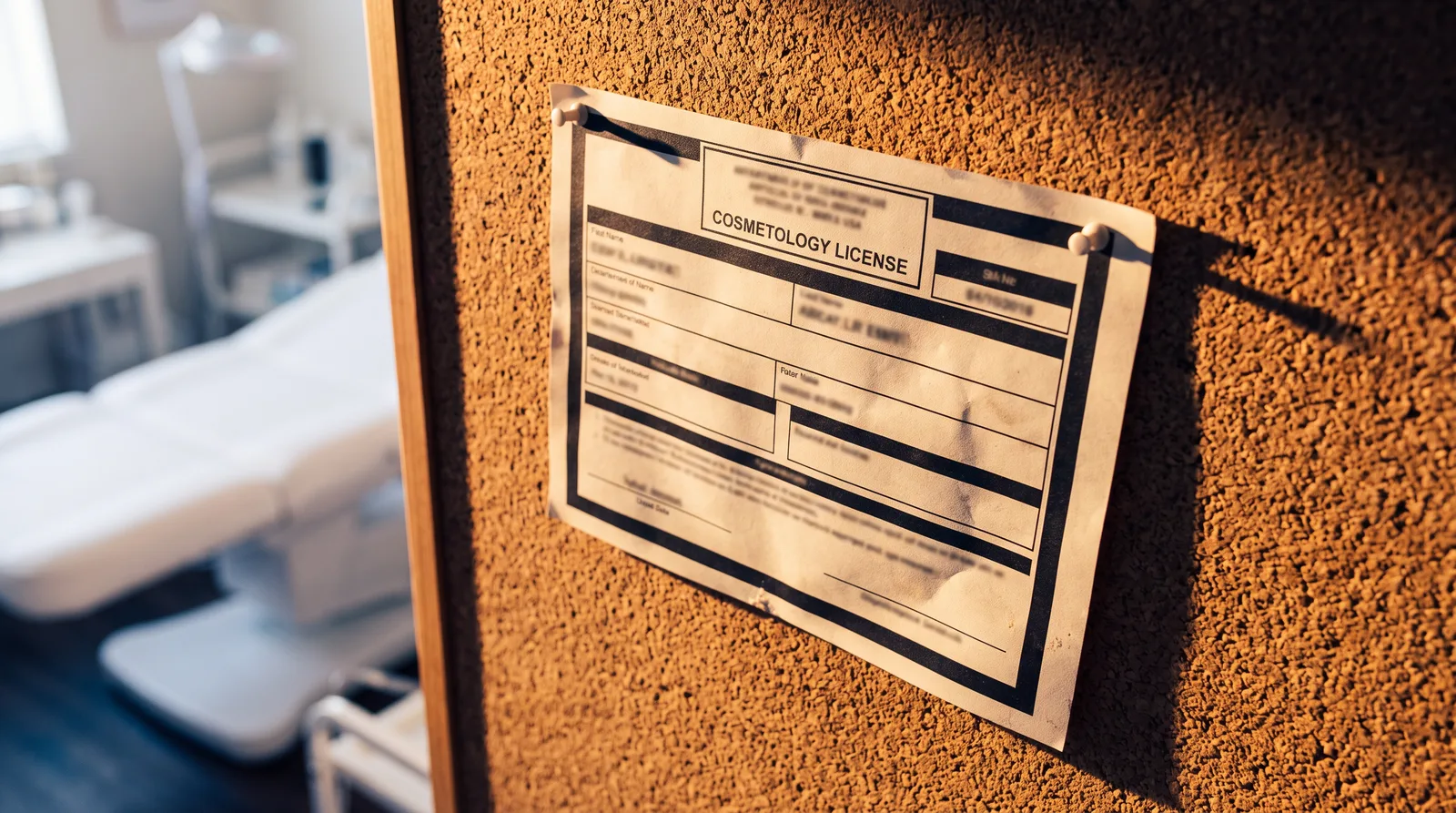
If you've been doing everyone's skincare routine, obsessing over ingredients, and dreaming about working in a spa or building your own clientele — this post is for you. Becoming a licensed esthetician is one of the most accessible paths into a beauty career, but the licensing process has a lot of moving parts that can feel overwhelming before you even start. Let's break it down clearly, step by step.
Step 1: Understand That Licensing Is State-by-State
This is the first thing every aspiring esthetician needs to know: there is no single national esthetics license. Cosmetology and esthetics licensing in the US is governed state by state, which means the requirements where you live — or where you want to work — are the ones that matter.
That said, the general framework is consistent across most states:
- Complete a state-approved esthetics program
- Pass a written (theory) exam
- Pass a practical (hands-on) exam
- Apply for your license through your state's cosmetology board
The details — particularly the required training hours — vary significantly.
Step 2: Know Your State's Hour Requirements
Required training hours for esthetics programs range roughly from 260 hours on the low end (states like New York) to 1,000+ hours in states like Texas and Tennessee. Most states land somewhere between 400 and 600 hours. A few examples:
- California: 600 hours
- Florida: 260 hours
- Texas: 750 hours
- New York: 260 hours
- Georgia: 1,000 hours
- Illinois: 750 hours
Before you enroll anywhere, go directly to your state's board of cosmetology website and confirm the current hour requirement. These numbers can and do change, and you want to verify from the official source — not a third-party summary that may be outdated.
The hour requirement directly affects how long your program will take and, often, how much it costs. A 260-hour program in New York might be completed in a few months part-time. A 1,000-hour program in Georgia will take considerably longer.
Step 3: Choose a State-Approved School
Your program must be approved by your state board — otherwise, the hours won't count toward licensure. When evaluating schools, ask:
- Is this program approved by the state board in the state where I plan to be licensed?
- What does the curriculum cover? (Look for facials, chemical exfolients, waxing, client consultations, sanitation and safety, and basic business skills.)
- What is the student-to-instructor ratio for hands-on practice?
- What exam prep does the school provide?
A strong program won't just get you to the minimum hours — it will prepare you to actually pass your exams and feel confident on your first day behind the treatment table.
Step 4: Pass Your Licensing Exams
Most states use exams administered by one of two national testing organizations: NIC (National-Interstate Council of State Boards of Cosmetology) or PSI Exams. Some states use their own board exams. Check which your state uses.
The written exam tests your knowledge of skin anatomy, physiology, sanitation protocols, chemical ingredients, contraindications, and state law. This is where dedicated study time pays off — don't underestimate it.
The practical exam tests your ability to perform services correctly, safely, and according to state standards. You'll typically demonstrate procedures like a facial, hair removal, or sanitation setup in a timed, observed setting.
Good exam prep means reviewing your theory notes, practicing procedures until they feel automatic, and familiarizing yourself with your state board's specific rubric for the practical portion.
Step 5: Apply for Your License and Think About What Comes Next
Once you pass both exams, you'll submit your license application to your state board along with the required fee (typically $25–$100, varying by state) and any supporting documentation. Processing times vary, so apply promptly after passing.
With your license in hand, your career options open up immediately:
- Day spas and resort spas are common first employers with built-in clientele
- Medical spas (medspas) often require additional training but offer higher earning potential
- Salon suites let you rent your own space and build an independent book
- Freelance and mobile esthetics work well in some markets
Many estheticians start as employees to build their client base and confidence, then transition to renting their own suite or launching their own business once they're established.
The Real Foundation Is Your Education
The hours, the exams, the application — those are all just the scaffolding. What actually builds a career is the quality of the skills underneath. Knowing how to read skin, perform a genuinely effective facial, handle waxing with precision, and consult with clients in a way that builds trust — those are the things that turn a license into income.
If you're ready to go beyond the basics and build a real, professional skill set, that's exactly what The Esthetics Studio is designed to do. The license gets you in the door. Your training determines what happens once you're there.
Want to go deeper than a blog post?
The Esthetics Studio
Master the art and science of skin care — from facial techniques and waxing to client consultations and spa business fundamentals. Build the skills that turn a license into a thriving esthetics career.
Start learning — $49/mo